


Automatic PS4 CPU BGA Rework Station
1. DH-A2 automatic BGA machine for PS4 Laptop CPU, and other motherboards. 2. Solder, reball, desoldering different kind of chips 3. One-stop solution for SMD components 4. Chip size: 2*2-80*80mm.
Apraksts
Automatic PS4 CPU BGA Rework Station
1.Application Of laser positioning Automatic PS4 CPU BGA Rework Station
Work with all kinds of motherboards or PCBA.
Solder, reball, desoldering different kind of chips: BGA,PGA,POP,BQFP,QFN,SOT223,PLCC,TQFP,TDFN,TSOP,
PBGA,CPGA,LED chip.
2.Product Features of CCD Camera Automatic PS4 CPU BGA Rework Station
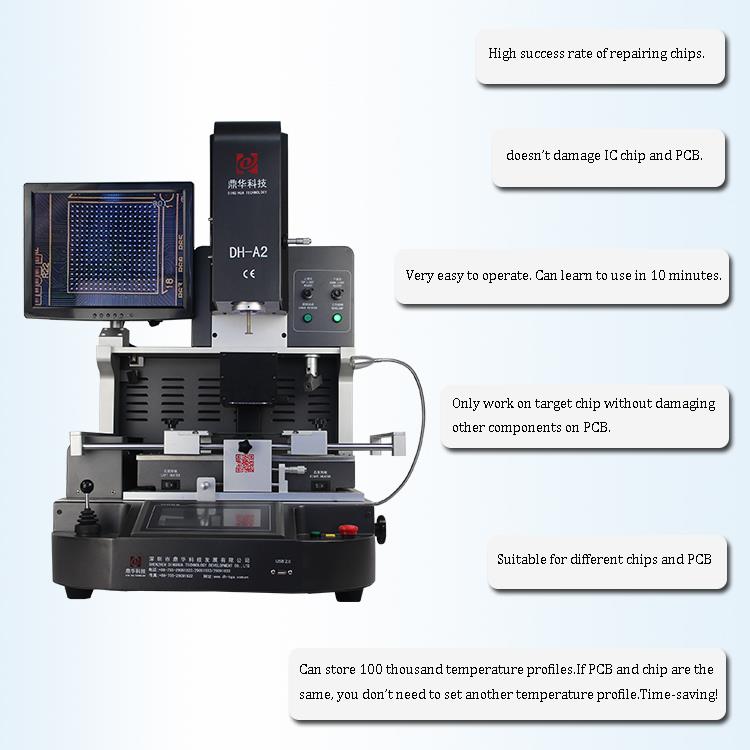
3.Specification of DH-A2 Automatic PS4 CPU BGA Rework Station

4.Details of Optical alignment Automatic PS4 CPU BGA Rework Station


5.Why Choose Our Automatic PS4 CPU BGA Rework Station?


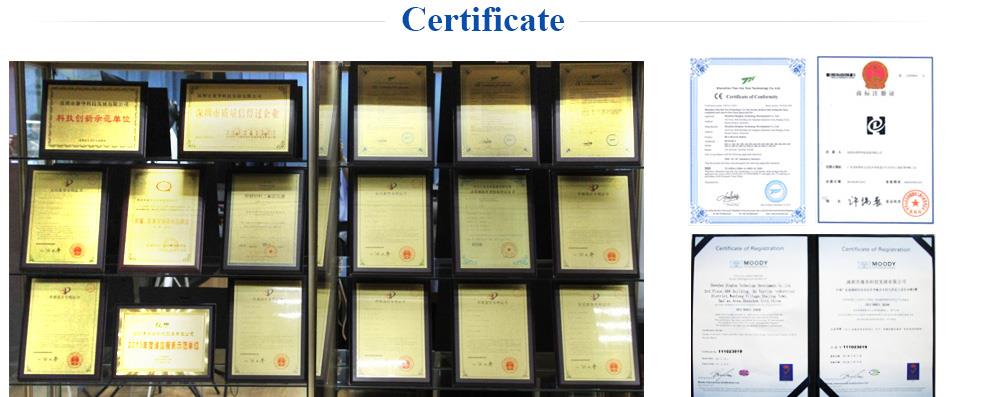
6.Certificate of Automatic PS4 CPU BGA Rework Station
UL, E-MARK, CCC, FCC, CE ROHS certificates. Meanwhile, to improve and perfect the quality system, Dinghua has passed ISO, GMP,
FCCA, C-TPAT on-site audit certification.
7.Packing & Shipment of Automatic PS4 CPU BGA Rework Station

8.Shipment for Automatic PS4 CPU BGA Rework Station
DHL/TNT/FEDEX. If you want other shipping term, please tell us. We will support you.
9. Terms of Payment for Automatic PS4 CPU BGA Rework Station
Bank transfer, Western Union, Credit Card.
Please tell us if you need other support.
10. How DH-A2 Automatic PS4 CPU BGA Rework Station?
11. Related knowledge
The CPU frequency is the clock frequency of the CPU, which is simply referred to as the frequency of the operation of the
CPU (the number of synchronization pulses occurring within one second). The unit is Hz. It determines how fast the computer
is running.
The CPU frequency is the clock frequency of the CPU, which is simply referred to as the frequency of the operation of the CPU
(the number of synchronization pulses occurring within one second). The unit is Hz. It determines the speed of the computer.
With the development of the computer, the frequency has evolved from the past MHZ to the current GHZ (1GHZ=10^3MHZ
=10^6KHZ=10^9HZ).
Generally speaking, in the same series of microprocessors, the higher the main frequency, the faster the computer, but for different
types of processors, it can only be used as a parameter for reference. In addition, the CPU's computing speed depends on the performance
indicators of all aspects of the CPU's pipeline. Since the main frequency does not directly represent the operation speed, under certain
circumstances, it is likely that the actual operating speed of the CPU with a higher main frequency is lower. Therefore, the primary
frequency is only one aspect of CPU performance and does not represent the overall performance of the CPU.
Speaking of the processor frequency, we must mention two concepts closely related to it: multiplier and FSB, FSB is the reference frequency
of the CPU, and the unit is also MHz. The FSB is the speed of synchronous operation between the CPU and the motherboard, and the FSB in
most computer systems is also the synchronous operation speed between the memory and the motherboard. In this way, it can be understood
that the FSB of the CPU is directly connected to the memory. Through, the synchronous running state between the two is realized; the multiplier
is the ratio of the main frequency to the external frequency.
Main frequency, external frequency, multiplier, its relationship: main frequency = FSB × multiplier. Early CPUs didn't have the concept of "multiplier",
when the main frequency and the system bus were the same. With the development of technology, the CPU speed is getting faster and faster, and the
memory, hard disk and other accessories can't keep up with the speed of the CPU, and the appearance of the multiplier solves this problem, which can
make the memory and other components still work at a relatively low level. At the system bus frequency, the CPU's main frequency can be infinitely
increased by multiplying (theoretical). We can think of FSB as a production line in the machine, and multiplier is the number of production lines. The
speed of production of one machine (main frequency) is naturally the speed of the production line (external frequency) multiplied by the number of
production lines. (multiplier). Manufacturers have basically locked the multiplier, to overclock only from the FSB, through the combination of multiplier
and FSB to the motherboard jumper or set soft overclocking in the BIOS, thus achieving a partial improvement in the overall performance of the computer.
Pay attention to the CPU's FSB when purchasing.


